 Adventure
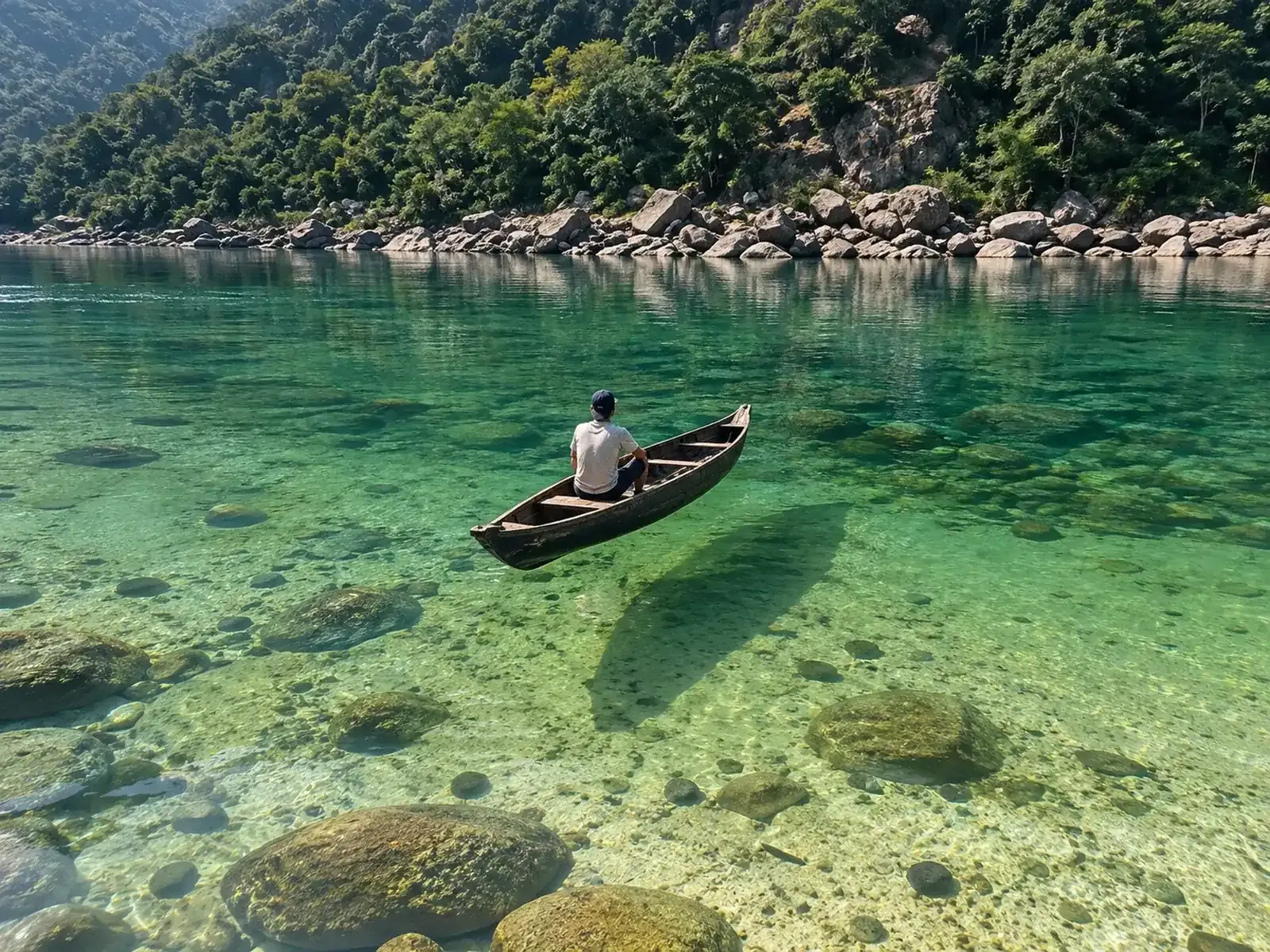
Kayaking on the Umngot
Paddle on one of India's clearest rivers with a local guide.
 Talk to a trail designer
Home / Meghalaya / Double Decker Living Root Bridge
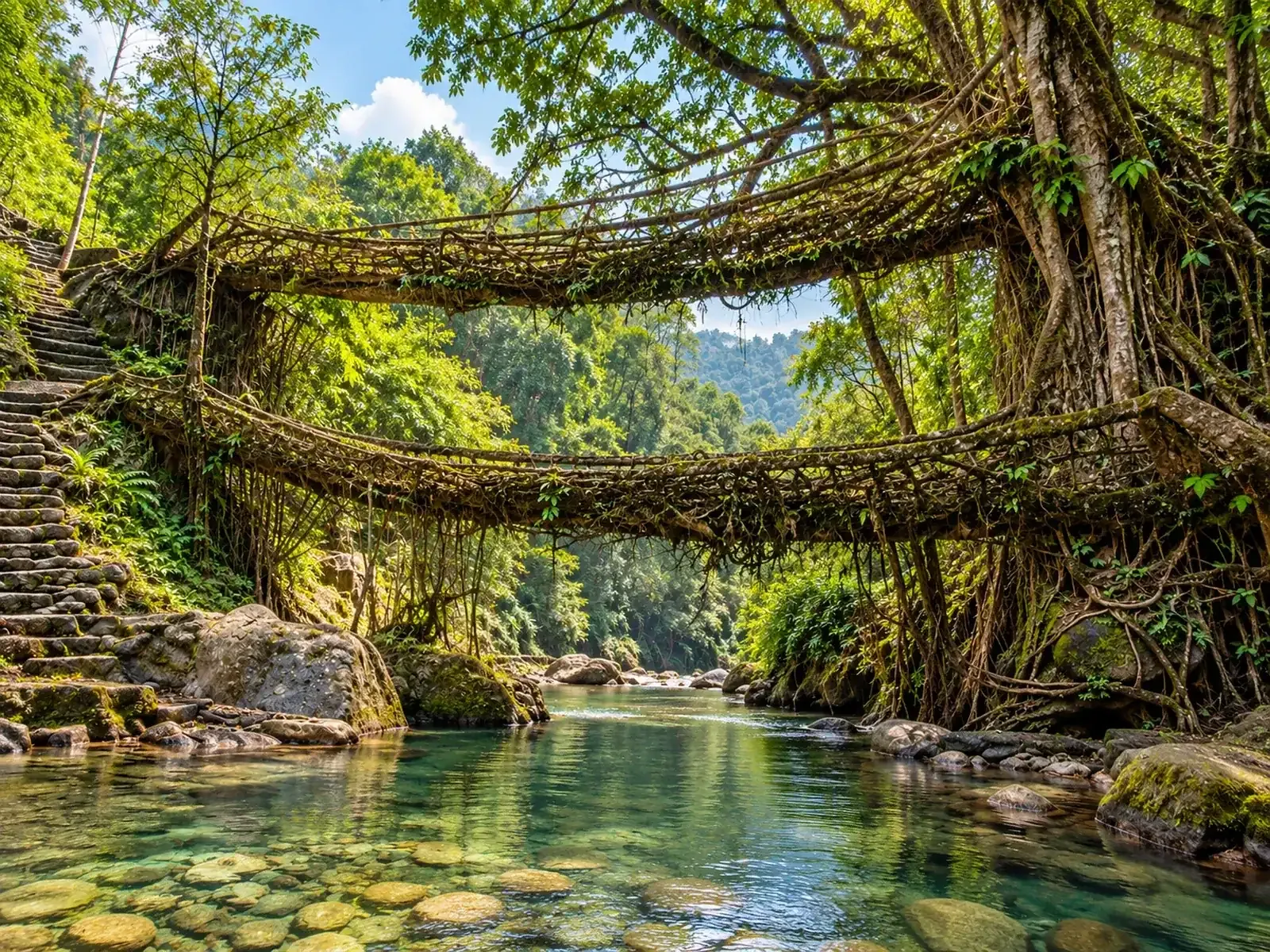
Two crossings, one above the other, grown from living tree roots in the forest below Cherrapunji.
Check before you go: Timings, fees and access can change with the season, festivals and weather. Check the latest timings before you go; on our trips we confirm them for you.
The Double Decker Living Root Bridge is a two-level bridge grown from rubber fig roots in Nongriat, a village near Cherrapunji in Meghalaya. Reaching it means walking down about 3,000 to 3,500 stone steps from Tyrna, around 4 to 6 hours there and back. Go between October and March, when the steps are drier and the pools below are clear.
Locals call it Jingkieng Nongriat, and you will also see it named the Umshiang double decker root bridge, after the stream it crosses. The Khasi people grew it by guiding the aerial roots of rubber fig trees (Ficus elastica) across the water until they thickened and fused. It is thought to be around 200 years old, and it gets stronger as it ages rather than weaker.
The upper span was added when monsoon floods rose too close to the lower one. In 2022, Meghalaya's living root bridges went on UNESCO's tentative World Heritage list as "Jingkieng Jri: Living Root Bridge Cultural Landscapes".
Not suitable for most parents over 60 or anyone with knee problems. On our trips this is an optional day.
It sits in Nongriat village, deep in a valley in the East Khasi Hills, about 15 km from Sohra (Cherrapunji). No road reaches the village. The walk starts at Tyrna, the last point a car can go.
| From | Distance to Tyrna | By road |
|---|---|---|
| Sohra (Cherrapunji) | About 15 km | 30 to 45 minutes |
| Shillong | About 70 km | 2.5 to 3 hours |
| Guwahati | About 180 km | 5 to 6 hours |
Self-drive rental cars for tourists are not allowed in Meghalaya, so book a taxi or a trip with a driver.
The trail is about 3 km each way, almost entirely stone steps: roughly 3,000 to 3,500 of them. Going down takes 1.5 to 2 hours. Climbing back up takes 2 to 3 hours, and that is the part that tires people.
On the way you pass Nongthymmai village, a single root bridge, and two swaying steel bridges over blue streams. Below the bridge, natural pools are good for a cold swim when the water is calm.
October to March is the best window. December to February is driest; the monsoon months, June to September, make the steps slippery and the streams fast.
Small shops on the trail sell tea and snacks. Carry your own lunch.
Experiences nearby
AdventurePaddle on one of India's clearest rivers with a local guide.
 Must do
A short, easy walk to a bridge grown from living tree roots. A good choice for parents.
 Food & people
Sit down for a home-cooked Khasi lunch with a family in one of the cleanest villages in India.
 Adventure
FAQ
Yes, if you can climb stairs steadily for two to three hours with breaks. Go slowly, start early, and the climb back is manageable for most healthy adults.
For most people over 60, and for small children, the climb back is too much. The Riwai root bridge near Mawlynnong is a short, easy walk and a better choice for them.
Stay a night if you can. Nongriat's simple homestays let you split the climb, see the bridge before the crowds arrive, and add Rainbow Falls without rushing.
It is possible but harder. From June to September the steps are slippery and streams run fast, so go only with a guide and expect closures after heavy rain.
Yes, if you have the legs for it. It is about an hour's walk beyond the bridge and adds roughly two hours to the day.
Carry enough for the guide, the village entry and camera fees, food and a homestay, as nothing beyond Tyrna takes cards. Guides are reported to charge around ₹700 to ₹1,500 per group.
Something else on your mind? Ask on WhatsApp